Saturday, October 18, 2014

Rise in CO2 concentration affecting various fish species

The rise of atmospheric CO2 concentration has raised a myriad of environmental concerns.   Environmental chemists are perturbed about methane release from increased melting of polar ice, climatologists predict the weather to continue to become more extreme, and biologists and biochemists have shown increased levels of CO2 can have a detrimental effect on certain species.  

Fish failing to adapt to rising carbon dioxide levels in the ocean, a journal article published on The Guardian, summarizes a peer-reviewed article called Effects of CO2 on fish behavior undiminished by transgenerational acclimation.  These articles explore the effect of rising CO2 levels in the ocean on the spiny damselfish.

The article in The Guardian explains the general methodology of the spiny damselfish study. The fish were kept in either a control group, with normal CO2 concentration (446 uatm), a variable group with moderate CO2 concentration (656 uatm), or a variable group with high CO2 concentration (912 uatm).  The results revealed that when higher concentrations of CO2 are exposed to the young offspring from parents both in the control group and the variable groups, they lose their ability to detect danger from predators (chemical alarm cue) and have a diminished sense of smell. These findings demonstrated little to no transgenerational acclimation within the spiny damselfish, which could result in a decline in their population due to affected brain functions until genetic mutation allows for adaptation.


The journal article in The Guardian did a very good job of summarizing the peer-reviewed article.  It provided the methodology of the research study, explained the results, and discussed the significance of the findings as they relate to the survivability of various fish species.  It provides enough scientific information for readers to understand the issue, while not potentially overwhelming those who do not have a scientific background.


Friday, October 17, 2014

New neutral molecular cluster formation observed in real time under atmospheric conditions


    It has been known for several years that sulfuric acid (SA) contributes to the formation of tiny aerosol particles, which play an important role in the formation of clouds. And a new study recently published stated that dimethylamine (DMA) can enhance new particle formation. The formation of neutral (i.e. uncharged) nucleating clusters of sulfuric acid and dimethylamine was observed for the first time.

    Scientists reported on experiments form the Cosmics Leaving Outdoor Droplets (CLOUD) chamber at the European Organization for Nuclear Research (CERN), revealing the formation of neutral particles containing up to 14 SA and 16 DMA molecules, corresponding to a mobility diameter of about 2 nm, under atmospherically relevant conditions.


the CLOUD experiment in October, 2013.
Credit: Maximilien Brice/Copyright: CERN
    The capability of sulfuric acid molecules together with water and ammonia to form clusters and particles has been recognized for several years. However, clusters that form in this manner can vaporize under the conditions that exist in the atmosphere and an evaporation rate for particles can be concluded. For this experiment scientists stated that new particle formation in SA-DMA system has evaporation rates that are effectively zero. Therefore, the system of sulfuric acid and dimethylamine forms particles much more efficiently because even the smallest clusters are essentially stable against evaporation. The science daily referred the DMA as 'superglue' for clusters to against evaporation.
Molecular weight and composition of neutral clusters during a new
particle formation event with SA and DMA. (A) Mass defect plot measured
with the CI-APi-TOF mass spectrometer for an experiment with 10 pptv DMA
and 3 x10e7 cm−3 SA. The mass defect is the difference between the exact
mass and the nominal (integer) mass of the cluster. The symbol size is proportional
to the logarithm of the signal intensity (count rate). Background
ions and clusters (not containing SA or DMA) are indicated by gray symbols.
(B) The same data with the signals grouped to show the number of SA and
DMA molecules in the cluster.
Kürten et al. 2014
    The PNAS publication concludes that their new observation demonstrate that a cluster containing as few as two sulfuric acid and one or two dimethylamine
molecules is already stable against evaporation. Moreover, their result bridge the gap between the molecular and particle perspectives of nucleation, revealing the fundamental processes involved in particle formation and growth.

As for the science daily article, I think it did a fairly good job in describing the new observation and explaining it to readers. The writer also added some basic knowledge of particle formation and how particle formation can impact climate. So this article is relatively plain for readers without relative backgrounds. However, I think this article leaves out many details from original paper and slightly overstated the role DMA plays in nucleation by using terms such like 'superglue',and 'tremendously'. Personally, I'll rate this article 6/10 because it do attracted reader’s attention and figured a new breakthrough in atmospheric chemistry, but explained it in an exaggerating and vague way.


Reference:


Monday, October 13, 2014

New Ozone Depleting Substances Discovered in Atmosphere


Scientists from the University of East Anglia have identified four new ozone depleting substances (ODS) in the atmosphere above Antarctica. Even with protocols set in place, including the Montreal Protocol, which banned the use of chloroflurocarbons (CFCs)/hydrochloroflurocarbons (HCFCs) and set phase-out limits for developed/developing countries -- the four new ozone depleting substances (ODS) that have been detected in the atmosphere, total 74,000 tonnes. Questions are being raised regarding the possible source of each compound. As stated above, the Montreal Protocol prohibits the production and release of CFCs/HCFCs and as of 2010, nearly every country should have phased them out of production. Yet, there is mounting evidence that the pollutants are being emitted even at present-day. As noted in previous weeks, there are still exemptions and products that are allowed to emit the compounds.


The scientists collected air samples from relatively unpolluted and fairly remote regions, namely in Tasmania. They were then able to reconstruct the lifetime emissions of the compounds by examining air extracted from polar firn (perennial snowpack) from Greenland, which allows for an accurate construction of abundance from the past century. Based on the time that these four compounds began to be detected (after the 1960s), it has been concluded that they are likely anthropogenic sources. Researcher Johannes Laube states, "In late 2012, CFC-113a was the most abundant of the four gases at 0.48 parts per trillion molar (ppt), followed by CFC-112 at 0.44 ppt, HCFC-133a at 0.37 ppt and CFC-112a at 0.07 ppt." He goes on to state, "The identification of these four new gases is very worrying as they will contribute to the destruction of the ozone layer. We don't know where new gases are being emitted from and this should be investigated. Possible sources include feedstock chemicals for insecticide production and solvents for cleaning electronic components." Interestingly enough, based on the lag behind Tasmania and the polar firn from Greenland, which can be seen in the Figure below, scientists are certain that the lag suggests that the source of these gases is in the Northern Hemisphere, where most developed countries are located. It's worth mentioning that while the Nature article specified the likely origin of the compounds, the ScienceDaily article did not mention such information; a curious tidbit to leave out.


Chemical structure for the compounds: CFC-112 (CFCl2CFCl2), CFC-112a (CF2ClCCl3), CFC-113a (CF3CCl3) and HCFC-133a (CF3CH2Cl)
Source: Nature Geoscience


The question remains: Who is responsible for governing the management of the phase out? Currently, production of exempted chemicals is reported to the United Nations Environment Programme (UNEP) Ozone Secretariat, but nearly no public data is available. There are many loopholes, as both the article and journal article point out: granted exemptions, no reporting on fugitive emissions or trace amounts released during the production of such ODS and more. As noted in Nature, "CFC-113a, for example, has been listed as an 'agrochemical intermediate for the manufacture of synthetic pyrethroids' in a list of Montreal Protocol exemptions in 2003. This is possibly related to its use in the production of the insecticides cyhalotrin and tefluhrin. There have however been no publicly accessible reports of actual CFC-113a production to UNEP." It is worth mentioning that the Nature article could not conclusively state that the observed ODS are due to the aforementioned emissions, yet the article urges for an investigation on the origins of the compounds.

Overall, the ScienceDaily article did a decent job conveying the findings from the Nature article in a clear and concise manner, but almost to a fault. The article itself was fairly short (both from Nature and ScienceDaily) and concluded that more investigation is needed to corroborate these findings. The methods mentioned in the ScienceDaily article were rather vague, namely focusing on the findings from the article rather that going into detail on how the polar firn and other air samples were analyzed. I would give the article a 6/10 because it left out key information regarding the possible sources for each new chemical, it did not specify that they are likely released from industrialized countries, and the methodology was glossed over.

ScienceDaily: http://www.sciencedaily.com/releases/2014/03/140309150534.htm
Nature: http://www.nature.com.proxy.lib.umich.edu/ngeo/journal/v7/n4/full/ngeo2109.html

Trees Reduce Pollution and Save Lives

          Air pollution is an ongoing problem in the United States with devastating effects on human health, ecosystem health, vegetation, and climate changes. The research article “Tree and forest effects on air quality and human health in the United States” by Nowak et al. was the first extensive study that focused on trees and their effect on air pollution and human health. Since the Clean Air Act the EPA has set National Ambient Air Quality Standards for six “criteria pollutants,” this study focused only on nitrogen dioxide (NO2), ozone (O3), sulfur dioxide (SO2), and particulate matter less than 2.5 microns (PM2.5).

 
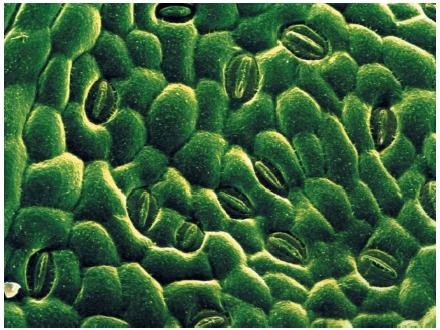
          Throughout the United States, tree cover and types of trees vary just like pollution. Intensive research has found that trees that give off small amounts of volatile organic compounds can aid in reducing urban ozone. Trees have the ability to directly remove air pollutants by absorption via leaf stomata. Once pollutants are inside of the leaf they disperse to “intercellular spaces and may be absorbed by water films to form acids or react with inner-leaf surfaces.” Particulate matter in the atmosphere is directly affected by trees discharging particles such as pollen, and absorbing particles on the plant surface and sometimes into the tree. During dry periods, photosynthesis can be affected due to the build-up of particulate matter on the leaves. During rainfalls, particulate matter is washed to the soil and eventually returns back to the atmosphere. The pollution removal formula or flux is equal to the deposition velocity of the pollutant to the leaf surface multiplied by the pollutant concentration (F=Vd x C).
 
                Science Daily reported on the findings of Nowak et al. by stating that air quality only improved by 1% due to pollutants being removed by trees. This number is considerable because on average trees “are saving more than 850 human lives a year and preventing 670,000 incidents of acute respiratory symptoms.”  It was found that trees remove more pollutants in rural versus urban areas, but 80% of Americans live in urban areas where human health effects are at a greater risk due to the lack of trees. In 2005 it was estimated that “130,000 PM2.5 related deaths and 4,700 ozone-related deaths were attributed to air pollution.”
                I do not think Science Daily did a good job at relaying how trees affect air quality and human health to the public seeing that it is a source for the latest science research news. The general concept of trees removing pollutants was mentioned along with eye-opening statistics on human health. However, Science Daily did not mention any information on the process of how trees remove atmospheric pollutants. The four pollutants were mentioned but chemical formulas were not given, and volatile organic compounds were not brought up. The public was not exposed to hardly any scientific terms or methods to how the statistics were calculated.The Science Daily article basically lets the general public know how important urban trees and forests are to removing atmospheric pollutants and helping to save lives. However, no countermeasures were brought up on how to stop the removal of trees in urban areas. Overall, I would rate the article 6 out of 10 due to the lack of vital information Nowak et al. provided.       

Science Daily Article:
 
Nowak et al. 2014. Tree and forest effects on air quality and human health in the United States. Environmental Pollution. 193:119-129.


Monday, October 6, 2014

Ozone Production in Winter Months

           As has been well documented, free radical production in the troposphere through either primary or secondary pollutants leads to rather deleterious effects. Through the release of various pollutants, photochemical smog is given an opportunity to form and thus can cause adverse health and environmental effects. This effect, however, is usually catalyzed under ideal conditions: warmth, sunlight and relatively little movement of air mass in order to keep the reactants in the area.  An interesting phenomena, however, has recently been exposed in Northeastern Utah, a main gas and oil basin.


            The Unitah Basin in Northeastern Utah is home to numerous oil and gas wells, boasting a relatively small population of 50,000. This location is unique, however, as it exceeded the national air quality standard 49 times in 2013, according to a recent article published in Science Daily by Edwards et. al. Though this may not sound too farfetched for an oil basin, this excess ozone production peaked during the winter months, when seemingly none of the required conditions are met. Due to the oil basin, there are high amounts of VOCs emitted into the surrounding air that become concentrated due to an inversion of air temperature. Snow cover increases the surface albedo, or reflection coefficient, and provides more sunlight to catalyze the reaction, producing ozone as a secondary pollutant through reactions with products of VOC dissociation: carbonyls. James Roberts, of the NOAA ESRL, explains the importance of these wintery conditions, stating, "Oil and gas emissions of VOCs were high in all three years, but high ozone occurred only in the cold, snowy stagnant periods.”


            The publication released by Nature furthered this claim, as the authors explained the significance of the produced carbonyl products coupled with the lack of primary hydroxyl production due to the lack of water vapor and UV light. Due to the high presence of VOC emission from the gas and oil basin (which attribute to 92% of its production), there is a great potential for ozone production. Since these emissions are released into a shallow, stable boundary layer coupled with a higher reflection coefficient, the photolytic reaction of VOC is allowed to occur. These oxygenated VOC products, namely carbonyls, can then amplify the response of the relatively few primary radicals produced in the troposphere (due to insufficient conditions) resulting in efficient ozone production.

            Overall, I believe that the article in Science Daily did a fairly good job of summing up the findings of the Nature article. While it succinctly conveyed the main point of the article, however, it did leave out exactly how or why the presence of snow accelerates the production of ozone. Also, I think some of the language used makes the article seem less precise, namely when talking about VOCs and nitric oxides “cooking up” into the pollutants. The article in general gives the lay public a better understanding of the production of ozone and hints at the adverse health effects, but leaves out some key points; I would give it a 7/10. 

Sunday, October 5, 2014

Atmosphere's Self-Cleaning Capacity in Northern Hemisphere Proven Overestimated

Known as the ‘detergent’ of the atmosphere, the hydroxyl radical (OH) is a key oxidant involved in the removal of major air pollutants such as nitrogen oxides and many ozone-depleting substances such as methane from the air. It was assumed by scientists that about 25% more OH exists in the atmosphere in the northern hemisphere where most of the air pollution-related human activities take place, as compared with the southern hemisphere. The formation of OH is stimulated in the northern hemisphere as it ‘cleans’ the atmosphere by reacting with and breaking down the air pollutants. Because of the short lifetime (~1s) and low concentrations of OH in the atmosphere, the direct measurement of OH quantity is extremely challenging.

ESA / Thomas Reiter

Contrary to this assumption, a sciencedaily article described the findings of a recent Nature publication, which pointed out that the atmospheric OH concentrations in both hemispheres are at the same level. In this study, indirect estimates of OH concentrations were made with methyl chloroform measurement data from two atmospheric monitoring networks and an airplane that flew from pole to pole. This approach of surrogate was tested and confirmed by an atmospheric model, which found a tight linear relationship between the simulation results of methyl chloroform and OH. As explained in the article, methyl chloroform is almost exclusively broken down by OH, indicating a negative correlation between the two substances. Since the OH radical is a major ‘cleaning agent’ of the atmosphere, this new finding also means that the atmosphere’s self-cleaning capacity in the polluted northern hemisphere was overestimated previously.


A graph showing how NH/SH OH ratios were estimated from observed NH-SH methyl chloroform gradients

Overall, the article did a nice job providing a concise yet clear description of the findings in the Nature publication. I would give kudos to it for communicating lucidly the relationship between OH and methyl chloroform, which is the essence of many abstruse models and simulations. In addition, the article provided some background information that was not mentioned in the Nature publication, such as the stimulation of OH by some air pollutants (eg. nitrogen oxides), as well as the exclusive removal of methyl chloroform by OH. While this helps illustrate the research findings, the credibility of this information remains questionable. For these reasons, I would give the article a score of 8.5/10.


Links

Sciencedaily article: 
http://www.sciencedaily.com/releases/2014/09/140911125049.htm

Nature publication: 
http://www.nature.com/nature/journal/v513/n7517/full/nature13721.html